
Does an expanded playing field in the T20 World Cup really lead to more one-sided contests?

On St. Patrick’s Day in 2007, international cricket experienced one of its most chaotic and revealing moments. Bangladesh eliminated India from the ODI World Cup. Hours later, Ireland knocked Pakistan out of the same tournament. Two giants were gone before the Super 8 stage had even begun.
In most global sports, this would have been remembered as proof that expansion works. A more welcoming sport would have learned that giving smaller teams a stage makes competition richer and more unpredictable. Cricket reacted differently. Administrators saw not romance, but risk. The loss of marquee fixtures triggered a deep anxiety about underdogs and television markets, and the sport began moving toward smaller global tournaments.
That reaction created one of cricket’s most persistent myths that expanding the World Cup dilutes its quality.
The contraction of the ODI World Cup to ten teams in 2019 and 2023 was justified by a simple assumption, i.e fewer teams would mean more competitive matches. Emerging nations were framed not as participants in a global event, but as threats to it. The expansion of the men’s T20 World Cup to 20 teams in 2024 gives us something cricket rarely gets: a chance to test that assumption with real evidence.
This article uses results from the 2022 and 2024 Men’s T20 World Cups to examine whether expansion actually reduces competitiveness.
Measuring competitiveness in an unequal sport.
Cricket’s global structure is deeply unequal, which means competitiveness cannot be measured through wins and losses alone. A narrow defeat can reveal far more about parity than a comfortable victory.
For this analysis, we classify closeness of contests by victory margin:
Extremely Close: 1–10 runs, 1–2 wickets, or Super Over
Close: 11–20 runs or 3–4 wickets
Moderately Competitive: 21–50 runs or 5–7 wickets
Blowout: 51+ runs or 8–10 wickets
This framework allows comparison between tournaments with different formats and team counts while focusing on the closeness of contests rather than outcomes alone.
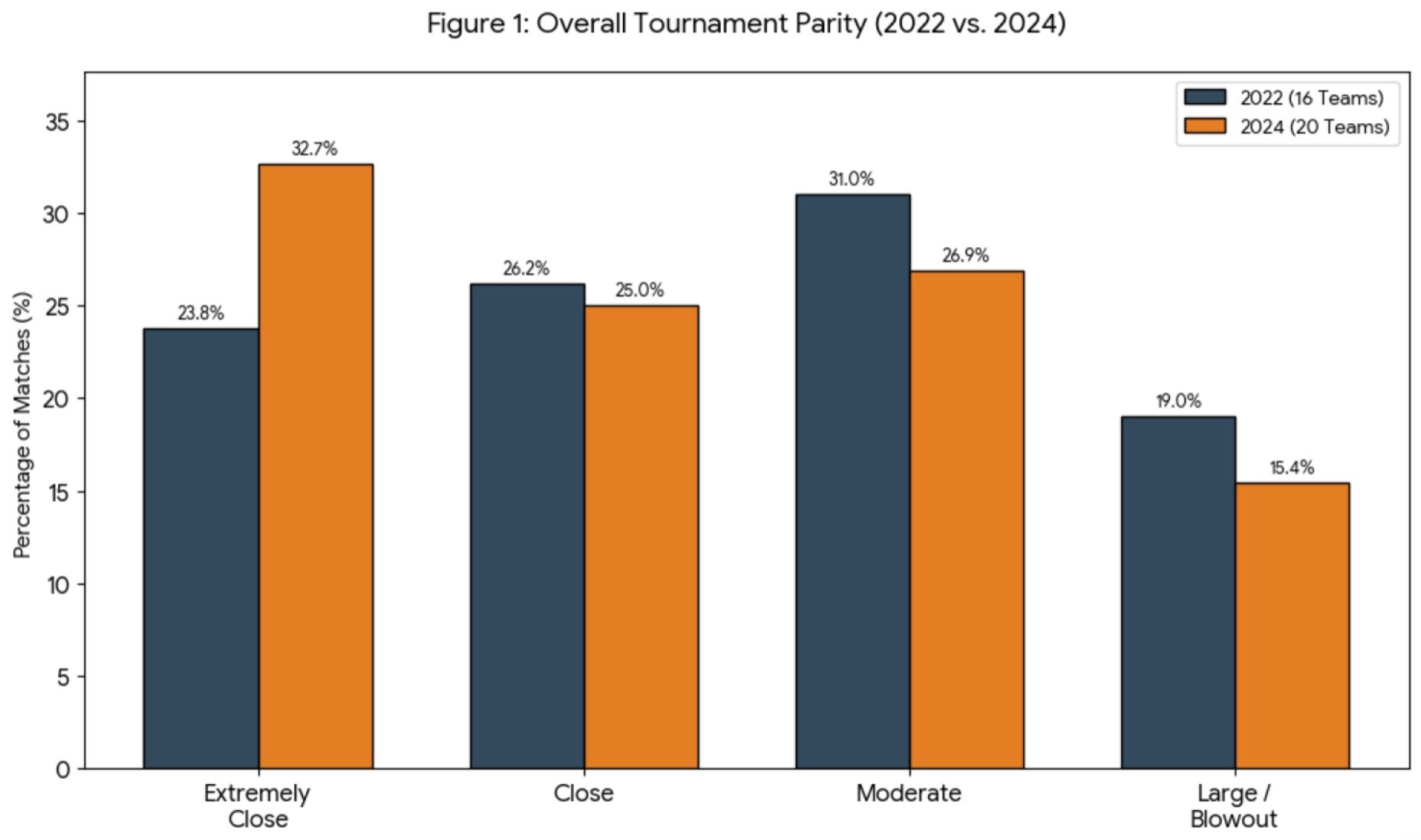
Figure 1. compares match competitiveness in the 2022 tournament in Australia with the expanded 2024 tournament in the West Indies and USA.
Expansion and competitive outcomes.
The results from this albeit basic analysis challenge long-held assumptions. The proportion of extremely close matches rose from 23.8% in 2022 to 32.7% in 2024, while the blowout rate fell from 19.0% to 15.4%. Expansion did not dilute competition. It coincided with more close finishes. Cricket shrank the ODI World Cup in search of competitiveness; the expanded T20 World Cup found it naturally.
Still, these numbers alone do not prove that emerging nations are competitive against established teams. It is possible that Associate nations are competitive among themselves while producing mismatches against Full Members.
To test that idea, we next examine contests by tier.
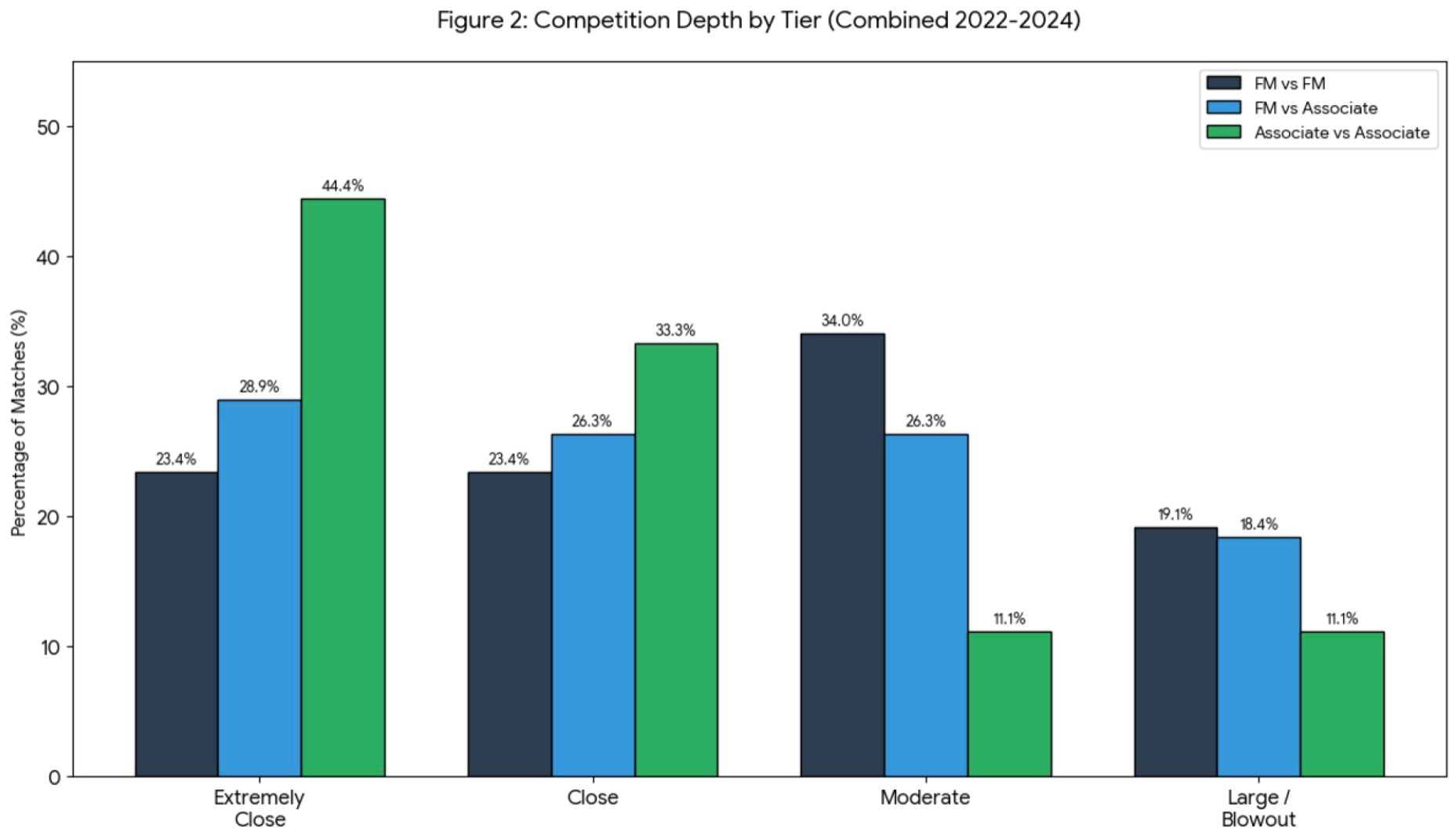
Figure 2: Competition Depth by Tier (includes all completed matches in the 2022 and 2024 editions of the mens T20 World Cup)
Where the closest cricket is happening...
Figure 2 divides matches into three categories:
Full Member vs Full Member
Associate vs Associate
Associate vs Full Member
The most competitive cricket in recent World Cups has occurred between Associate nations, where 44.4% of matches were extremely close. Even more surprising, Associate vs Full Member matches (28.9%) were more likely to be extremely close than Full Member vs Full Member contests (23.4%). Emerging teams are not just filling tournament slots. They are producing some of its most compelling games.
Do elite stages become more competitive once the weaker teams are out?
If Associate teams truly weaken tournaments, later stages when only Full Members remain should produce fewer blowouts. Our analysis show that they do not.
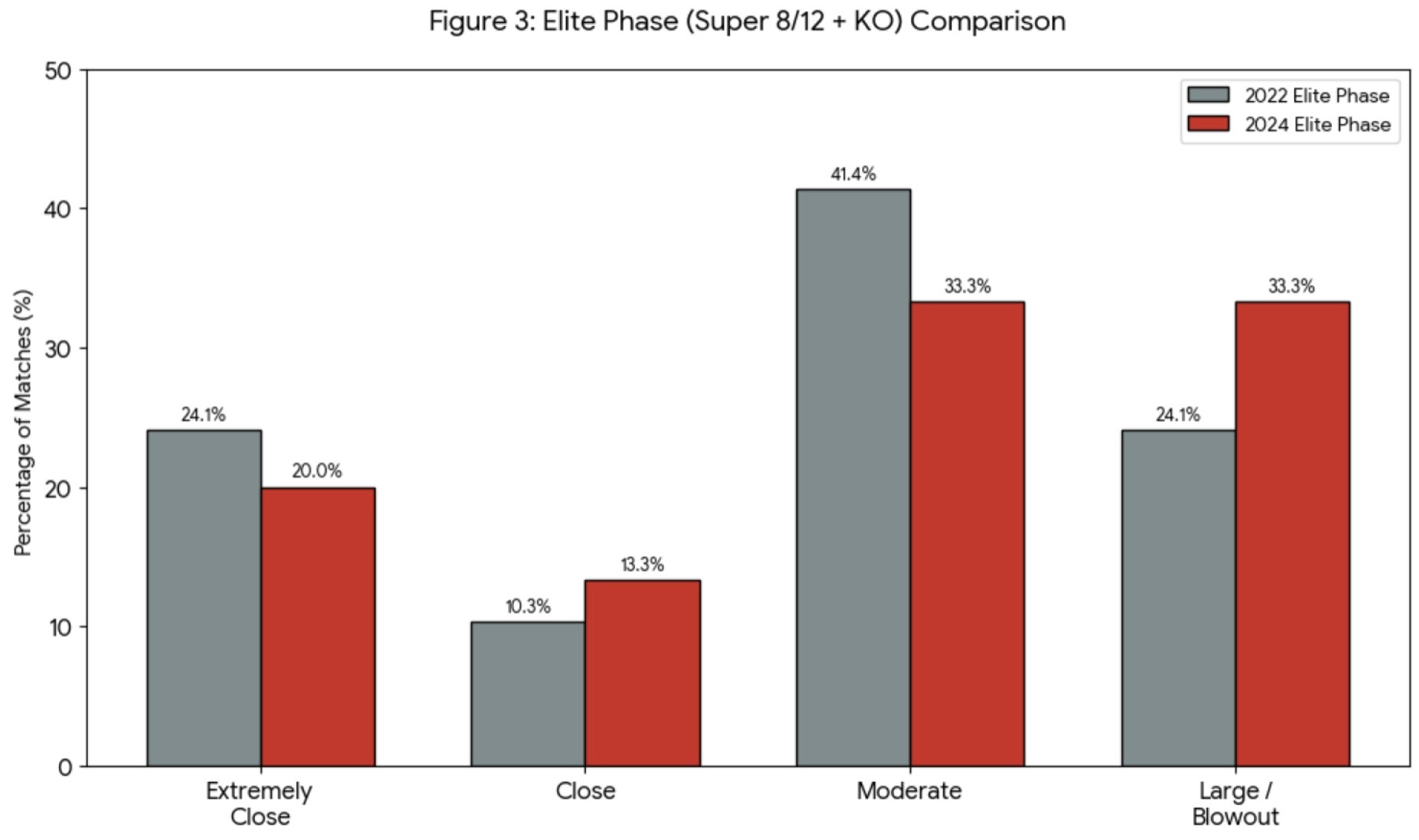
Figure 3: Does the competition get better when the Associates get knocked out in the ‘Elite Phase (Super 8/12 + KO)’? The answer is a resounding no. (includes all completed matches in the 2022 and 2024 editions of the mens T20 World Cup)
Figure 3 shows that the 2024 Super 8 and knockout rounds produced a blowout rate of 33.3, more than double that of the earlier rounds. High-stakes matches between elite teams often produce decisive results. England’s semi-final collapse against India in 2024, and India’s 2022 SF capitulation to England are reminders that full members can give us equally one-sided contests. The idea that “minnows” cause more one-sided games is not supported by the evidence of the past 2 tournaments.
The evolving middle tier of cricket.
Individual team performances reinforce the broader trend. The Netherlands has become a consistent threat, with half of its matches against Full Members in the last two tournaments classified as close or extremely close. The USA’s debut tournament in 2024 featured multiple high-intensity contests.
Official ICC labels of full-member or associate can sometimes hide the true competitive story. Zimbabwe defeating Pakistan in 2022, Ireland defeating England, and Afghanistan beating Australia and New Zealand in 2024 are recorded as Full Member matchups, even though they represent classic underdog victories.
If categorized by competitive reality rather than membership status, the influence of emerging teams would appear even stronger. The gap in international cricket is not just closing at the bottom but narrowing across the middle.
The resistance to expansion.
Despite this evidence, skepticism about expansion remains influential in cricket. In 2011, Matthew Hayden (https://www.newindianexpress.com/sport/cricket/2011/Jun/16/hayden-supports-10-team-world-cup-263353.htm) supported reducing the World Cup to ten teams, calling it the “right decision.” More recently, Ravi Ashwin questioned whether global tournaments need “so many teams,” suggesting that expanded early rounds lack excitement. While most sports view a World Cup as an opportunity to grow and celebrate the game at scale, cricket has a narrow view of just maximizing the number of lucrative matches every single time.
These views are not unusual in cricket. They reflect a deeper structural reality. The sport has long been organized around a small group of powerful nations. But this perspective often ignores how unequal cricket’s global ecosystem actually is. In football, players from emerging nations develop by competing regularly in elite leagues. In cricket, Associate players rarely face top opposition outside global tournaments. Full Members operate in a closed circuit of bilateral series and franchise competitions, while Associate teams may go years without playing a major nation.
When the USA pushes Pakistan to a Super Over, or Nepal takes South Africa to the final ball, those matches are not simply competitive. They are extraordinary acts of an underdog punching well above their weight! They are contests between teams separated not just by ranking, but by access, funding, and opportunity.
That they are still close tells us something important about modern cricket.
Expansion and the future of the game.
Mainstream cricket commentary in traditional powerhouses often treats an underdog’s progression to the latter stages not as a success story, but as a missed opportunity for more fixtures involving the sport’s commercial heavyweights. No other sport so actively despises the idea of an underdog win or an upset as cricket. It is impossible to ignore the double standard that governs the discourse around Associate participation. Cricket commentary still treats Associate defeats differently from Full Member losses. When established teams lose heavily, analysis focuses on tactics or form. However, when an Associate team suffers a single blowout, the commentary shifts from sport-centric analysis to an existential interrogation of their right to be there. Much like the scrutiny faced by women’s sports, where a single lopsided score is weaponized to question the validity of the entire platform, Associate nations are forced to carry the weight of their status in every game. They are not merely playing a match; they are defending their right to exist in the global conversation. By expanding the field and normalizing these matchups, we finally move toward a future where an underdog can lose a game without being asked to surrender their future. Cricket does not become less competitive when the World Cup expanded. It only becomes more democratic.
By Aditya
From the PCCI Podcast